
Starting or Returning to Functional Training - Part 1: Why You Can't Rush Your Body, and How Muscles, Tendons and Nerves Adapt to Training
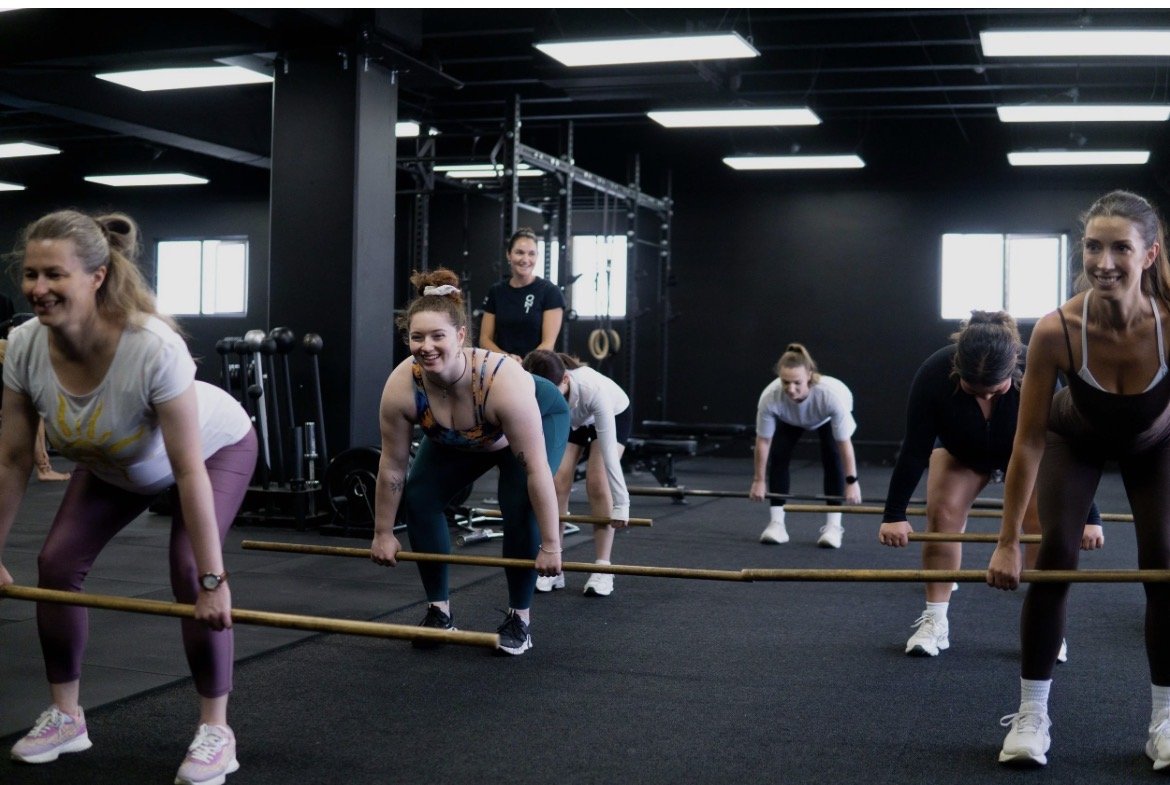
Beginners or those who have had a long hiatus get hurt more than anyone else in the gym, and the research on why points at things you control. Hit a front squat PR in week three and the knee has opinions by the weekend. Come back after a few months off and load the bar to where you left it, and the same thing happens. Your head said go and your body wasn't consulted. This blog covers what the research says about those early months, why your tissues adapt at different speeds, and the rules we use to get people through them.
Beginners get hurt most in the first months
A study of CrossFit athletes tracked injuries across experience levels over 12 months. Experienced athletes had 36% lower injury incidence than beginners, and injuries fell across the group as the months went on. For beginners the knee (56%) and shoulder (35%) took most of the damage. The authors pointed to technical skill and how well people manage their own training load as the likely difference.
Another study followed 168 novices through an eight week CrossFit start up program. 14.9% were injured, around three times the rate reported for experienced participants. The introductory classes did not protect them.
Coaching matters too. In a survey of 386 CrossFit athletes, injury rates were 14.6% for people with a coach present all of the time and 31.0% for those with a coach some of the time.
None of this makes functional fitness uniquely dangerous. One survey put the injury rate at 3.1 per 1000 hours, similar to Olympic lifting, powerlifting and gymnastics. The risk sits with beginners and with how fast they push.
We can't say what caused any one person's injury, and none of these studies proves rushing is the cause. What the data keeps pointing to is skill and load management. Both are in your hands.
What rushing looks like
It looks like adding weight every session because the last one felt easy. Going from two days a week to five because you're motivated. Taking every workout at full intensity because the person next to you is. Chasing a PR in week three because it would feel great.
Volume matters as well as weight. In a study of CrossFit athletes over six months, the injured group trained more hours a week than the uninjured group (7.3 versus 4.9) and more sessions (6.4 versus 4.7). That is an association and does not prove cause, but it fits the pattern.
Why learning comes first
A squat, a clean and a push up are all skills. Your nervous system learns them through repetition, and it learns whatever you repeat. Do reps under a load you can't control and you practise the compensation, the knee caving in, the back rounding. That comes from our experience coaching beginners, and it lines up with why technique keeps showing up in the injury research. Reps at a controlled load teach the pattern. Reps past that teach a worse one.
Your tissues run on different clocks
Early strength comes from two places at once, your nervous system learning the movement and your muscles growing. A meta-analysis of 41 studies, mostly 6 to 12 weeks long, found muscle thickness and neural activation both rose with training. You feel stronger quickly, and that feeling is real.
Tendons follow different rules. A meta-analysis of 27 studies found tendon stiffness changed when loads were high, above about 70% of maximum, and barely changed with lighter loads. Those programs ran 8 to 12 weeks or longer. Tendon tissue also turns over more slowly than muscle.
Some researchers argue strength can outrun tendon capacity and raise injury risk. A 2026 analysis found tendon stiffness rose proportionally more than strength and said a harmful mismatch has not been established. So we won't tell you your tendons are about to give out. Our read is simpler. Strength can arrive before your tissues have had the time and the right load to catch up, and nobody can give you a date for when they have.
Think of a roast. The outside browns fast and looks done. The middle takes longer and you can't tell by looking. Feeling strong is the brown outside.
Coming back after a break
The number in your head comes from a body that was being loaded week after week. After time off the bar might feel light, but your tissues haven't seen that load recently. We can't point you to a study that says how long a break resets what, so we won't pretend there is one. Start below the number in your head and earn your way back up. Rebuild in the order you built it the first time, with movement first and load second.
If you're returning from an injury, get assessed by a physio or exercise physiologist before you load it. A coach can help you train around it, but the assessment is their job.
Rules for the first 3-6 months
1. Treat early sessions as practice, not testing. The aim is a movement you can repeat the same way every time.
2. Let technique decide the next step. When the last rep looks like the first, you're ready for more.
3. Leave PRs alone. A PR tests what you've already built, so it belongs after the building.
4. Train where someone is watching your technique.
5. Expect to feel stronger before you're ready for heavier. Both can be true at once.
6. Coming back, start lighter than you remember.
Watch out for Part 2 which covers how to add load and volume without spiking either.
Don’t Wait - Start your journey with us today!
Here at the MVMT Hub, we understand that starting your health and fitness journey may be daunting and challenging, but with the right mindset and our guidance, it can also be incredibly fun and rewarding. We will help you focus on building a strong foundation, listen to your body, and enjoy the sense of accomplishment as you progress through your fitness goals. Starting your health and fitness journey at Mvmt Hub means embarking on a path to better health and fitness with a supportive community and expert guidance. Remember, every journey starts with a single step. We’re here to take that step with you.
References
Common Injuries Across Baseline, 6-Month, and 12-Month Assessments in CrossFit Athletes of Different Experience Levels, Sports (2026).
Injuries in Novice Participants during an Eight-Week Start up CrossFit Program: A Prospective Cohort Study, Sports (2020).
Weisenthal, B. M., et al. Injury Rate and Patterns Among CrossFit Athletes, Orthopaedic Journal of Sports Medicine (2014).
Hak, P. T., et al. The nature and prevalence of injury during CrossFit training, Journal of Strength and Conditioning Research (2013).
Retrospective Injury Epidemiology and Risk Factors for Injury in CrossFit, Journal of Sports Science and Medicine (2017).
Effects of strength training on neuromuscular adaptations in the development of maximal strength: a systematic review and meta-analysis, Scientific Reports (2025).
Human tendon adaptation in response to mechanical loading: a systematic review and meta-analysis of exercise intervention studies on healthy adults, Sports Medicine Open (2015).
Do Strength and Tendon Stiffness Adapt in Parallel? A Systematic Review and Multilevel Meta-Analysis of Chronic Mechanical Loading in Healthy Humans, Journal of Functional Morphology and Kinesiology (2026).
Functional Adaptation of Connective Tissue by Training, German Journal of Sports Medicine (2019).
Ready to dive into the world of Functional fitness? Visit Mvmt Hub, or contact us to schedule your first class. Your fitness journey awaits!